
Yesterday, while I was having tea with one of my closest friends, who is a psychologist by profession, she told me that IQ cannot be improved after a certain age. And I gasped, as I had this belief that your IQ and EQ improve with time. But she broke my bubble!
Now, what would I have done?
I googled!

After the tea, my curious brain quickly ran to my laptop and searched through the depths of the internet, if we could at least improve EQ if not IQ, because, in my opinion, EQ is more important than IQ. I think, by the title of this blog, you can make it out what the answer was.
Let me tell you, those of you who don't know what EQ is. Emotional Intelligence (EQ) is the ability to understand, manage and use your emotions to communicate, empathize, relieve stress, and overcome challenges.
In simple language, it is your people skills.
But what is the difference between IQ or EQ apart from their names?
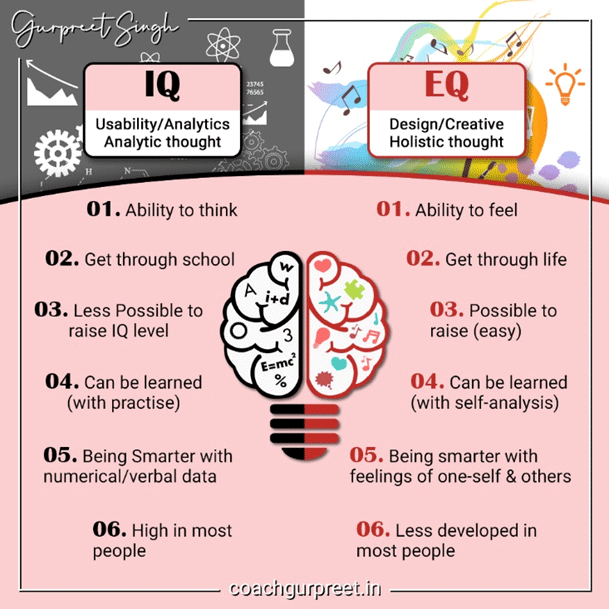
What’s the difference between IQ and EQ?
IQ, short for Intelligence Quotient, refers to your intellectual ability. IQ is the reasoning ability of a person. Here are a few of the uses of your IQ in your day-to-day activities:
logic to solve problems planning and strategizing understanding intellectual ideas adapt to change grasp and use of language
WHEREAS
An emotional quotient (EQ) is the perception of emotions in yourself and others. It is an ability to regulate and realize your and others' emotions. It refers to the use of this awareness to guide your behavior. In general, EQ helps you in:
identifying emotions empathizing with other people Modify your feelings and behavior according to different situations controlling your impulses withstand temptations resolving conflicts, and communicating effectively
Test your EQ!
Now that we have come so far… why not test it? Emotional intelligence is crucial to building a successful life. But how to know if you have a high EQ or not? Here's a link so you can know your EQ with results and work on it accordingly.
https://www.verywellmind.com/how-emotionally-intelligent-are-you-2796099
How to Build your EQ?
I hope assessing your EQ helped you to understand yourself better. If you have the results that show you have a poor EQ, then worry not, my readers, because I've got the solutions. Yes! as I discussed with you earlier, I will tell you how to improve your EQ and come up with a few points. You can use these strategies to build your EQ:

Do you have a stereotypical point of view? Are you a rushed person? Observe how you react to people. Observe what you think and how you interact with other people. Try to be more accepting of other people and understand their perspectives and needs. It will surely help you build your EQ.
Be responsible for your actions. If you have hurt someone, intentionally or unintentionally, apologize. Don't try to ignore it or justify your actions. People are willing to forgive if you apologize to them honestly. Take responsibility for your actions and try to set things right.
Think before you act. Examine how your actions are going to affect others. Always, always try to put yourself in others' shoes. How would they feel, or how would it impact them? Would they want to experience it?
Observe how you react in stressful situations. Do you feel sad when you don't get things done or your work is delayed? Do you play the blame game, get angry, or earnestly accept it? It is highly valued if you can stay calm and in control of your situation, both in the business world and outside. Keep your emotions in check when things start going awry. It will surely help you become a successful person.
If you want to build your EQ, then you should be self-aware. Start getting to know yourself and embracing your feelings and emotions. Start onto a journey of self-discovery. Your EQ will change automatically. When you become self-aware, you become self-accepting and empathetic towards others.
All there's left to say is if you want to improve your EQ, then just get out there and start practicing. Track your progress and build a new milestone, and achieve it.
Get out of your comfort zone and have more meaningful conversations with people.